Cynefin workshop

The Cynefin framework
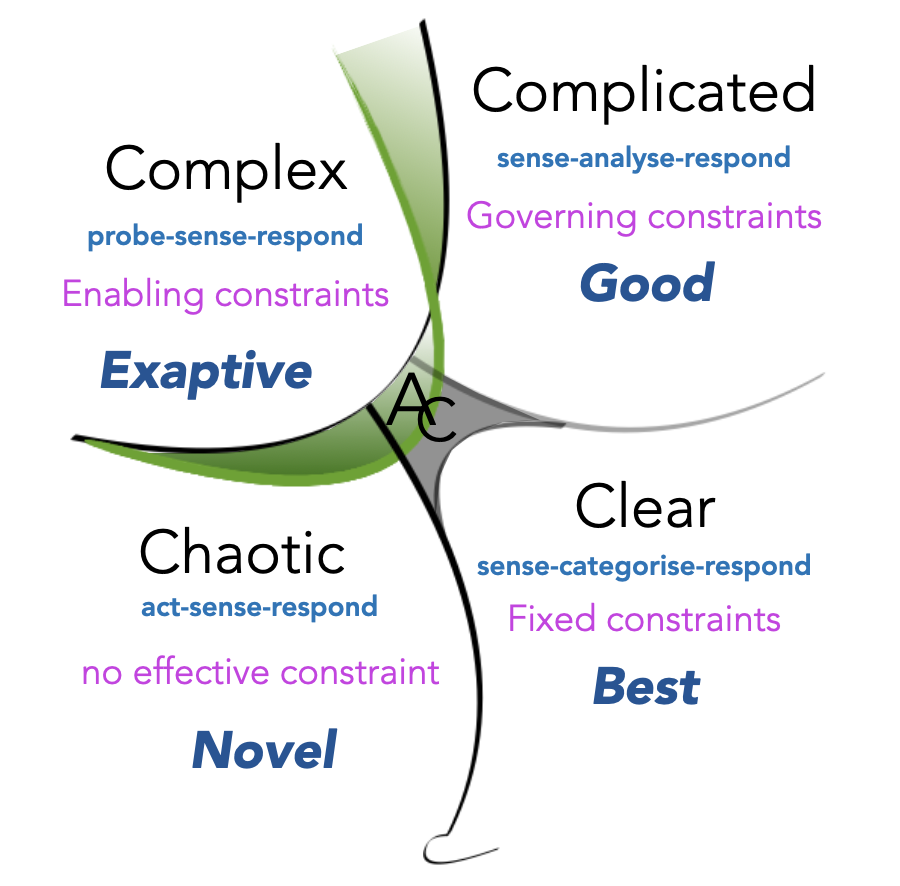
Cynefin is a sense-making framework created by Dave Snowden of Cognitive Edge. The framework allows people to make sense of a situation, to understand its context, and determine the appropriate course of action.

Its application is vast and profound. It offers teams, leaders and policy-makers a tool to determine the nature of a situation with guiding decision-making models.

The Cynefin A&E game
To help teams understand the Cynefin framework and consider how it can relate to their environment, Dean Latchana has created the Cynefin A&E game workshop.

The workshop’s game is based on a fictitious Accident & Emergency ward (aka Medical Emergency Room). The players are presented with different scenarios where patients arrive in different medical conditions.

The players use the Cynefin framework to decide how best to manage each situation; this is challenging because of the limited time and resources. Complexity emerges from their decisions and from an interaction of events. Therefore players need to use the dynamics of the Cynefin framework to handle emerging scenarios.

Learning outcomes

Players work together and use the Cynefin framework to manage various scenarios in an unpredictable environment. The game is designed to show how the framework can help teams understand the nature of complexity so they can better handle known or unknown situations.

The game scenarios are designed to relate to situations common to the players’ reality. The workshop introduces complexity theory, practice and application to help individuals gain better situational awareness and make more prudent decisions.

Some practical applications

  • Competitive awareness and response
  • Appropriate leadership & management styles
  • Understand the nature of today’s management challenges
  • Governance, policy and practice creation
  • Planning, risk management & product development
  • When to, and when not to, provide estimates
  • Refining the backlog and testing assumptions
  • Avoiding groupthink
  • Incident response

How to run the workshop

The workshop material is available in the Creative Commons, so you can run the workshop yourself. I’d ask that you acknowledge Dave Snowden, who developed the Cynefin framework, and give recognition to me (Dean Latchana) who created the workshop.

It’s advisable that you contact me to talk you through the workshop and material, and consider whether you’d like me to facilitate the workshop and teach the theory. Here are the slides from a workshop run in 2019 for a top-tier consultancy.

Importantly to run the workshop for commercial purposes, you need to become a premium member of Cognitive Edge, the consultancy which owns the rights. I am a premium member of Cognitive Edge, so I have the rights to use their tools commercially.

Creative Commons License

Creative Commons License
Cynefin A&E game workshop by Dean Latchana is licensed under a Creative Commons Attribution-ShareAlike 4.0 International License.

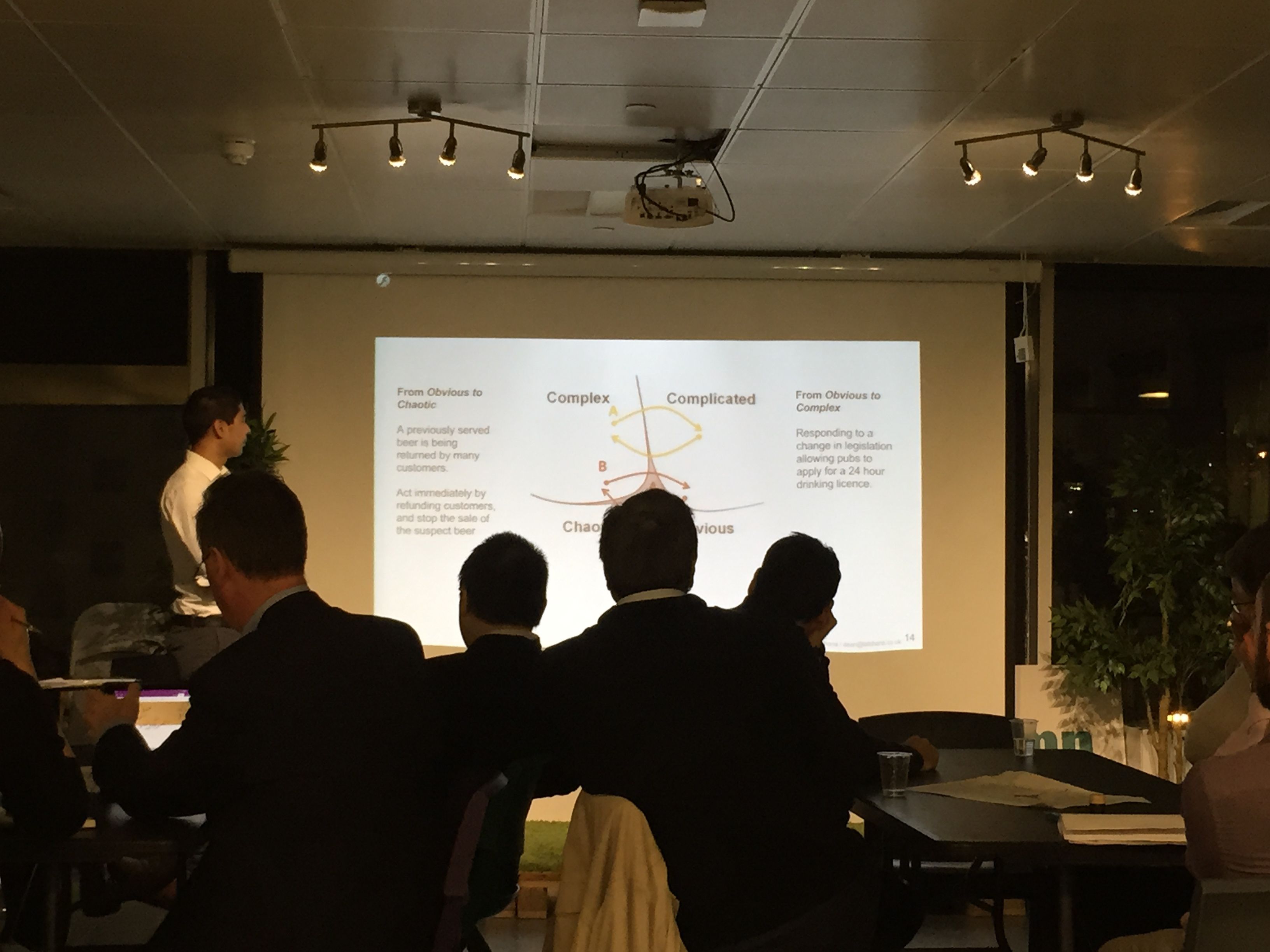
Photos from previous workshops
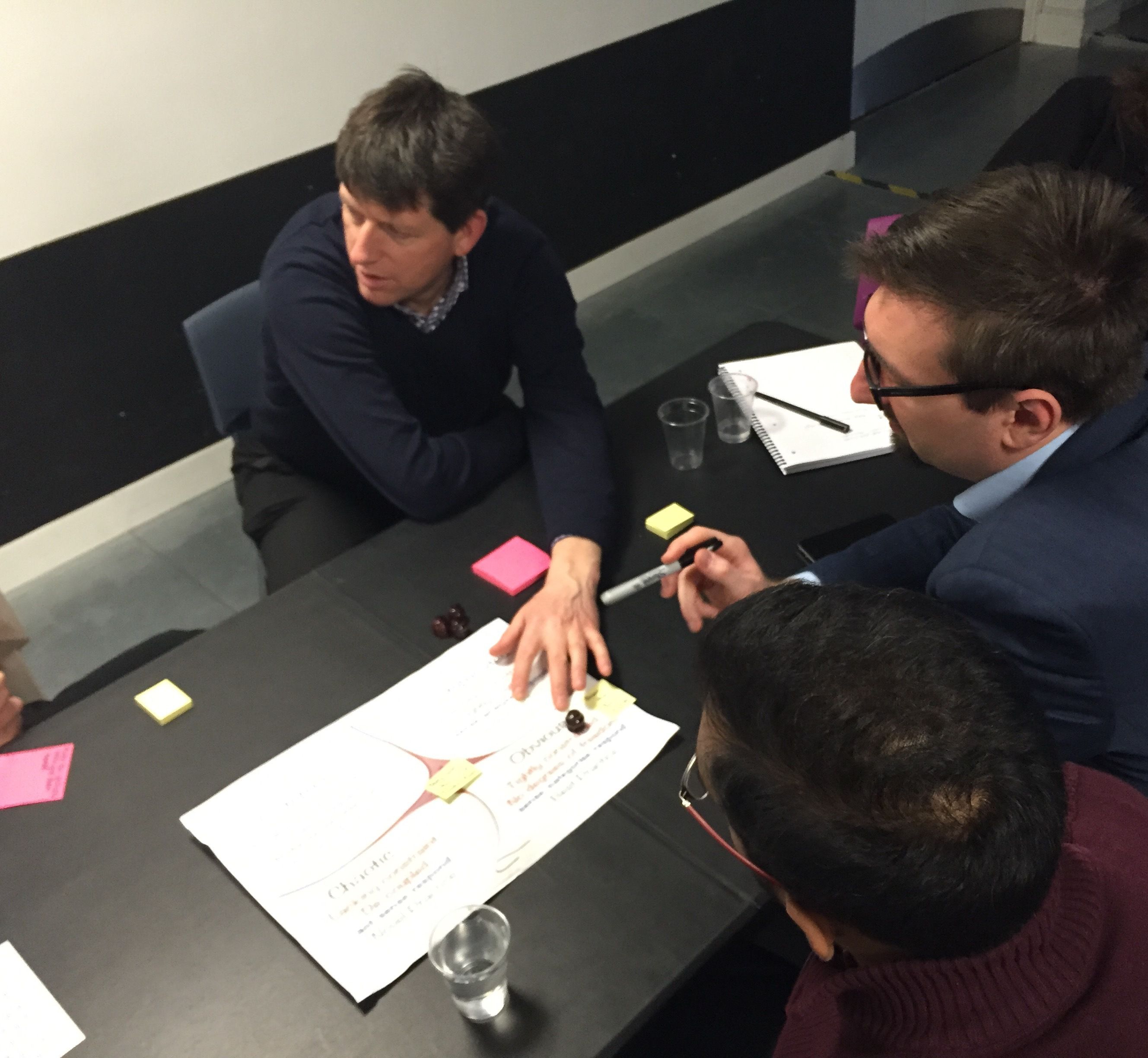
A thank you gift for running the workshop at King’s College Business School

Circles of influence and control – An issue management technique

The problem

Teams often find it hard to capture and visualise risks and issues in a way which allows the team, their stakeholders and leaders to clearly understand who needs to provide help.

The team’s goals will be threatened if captured risks and issues are inaccessible and hard to decipher.

The solution

To help teams communicate with stakeholders and leaders where the team needs specific help, I’ve created a technique called Circles of Influence & Control.

The technique uses visual management to show the degree of influence and control the team has over each risk or issue. Stakeholders and leaders can easily see where the team needs support.

It also encourages the team to understand what they have control over and immediately take steps to resolve the risk or issue.

This technique is inspired by an approach by Stephen Covey described in his classic book The 7 Habits of Highly Effective People.

Instructions

Setup

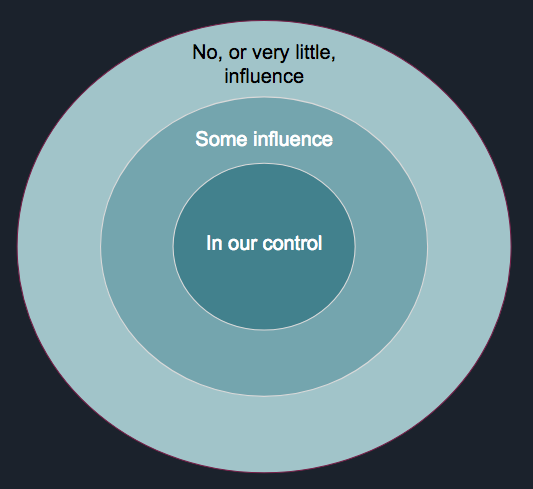
  1. Draw three concentric circles
  2. Label the inner circle “In our control”
  3. Label the middle circle “Some influence”
  4. Label the outer circle “No, or very little, influence

POPULATING

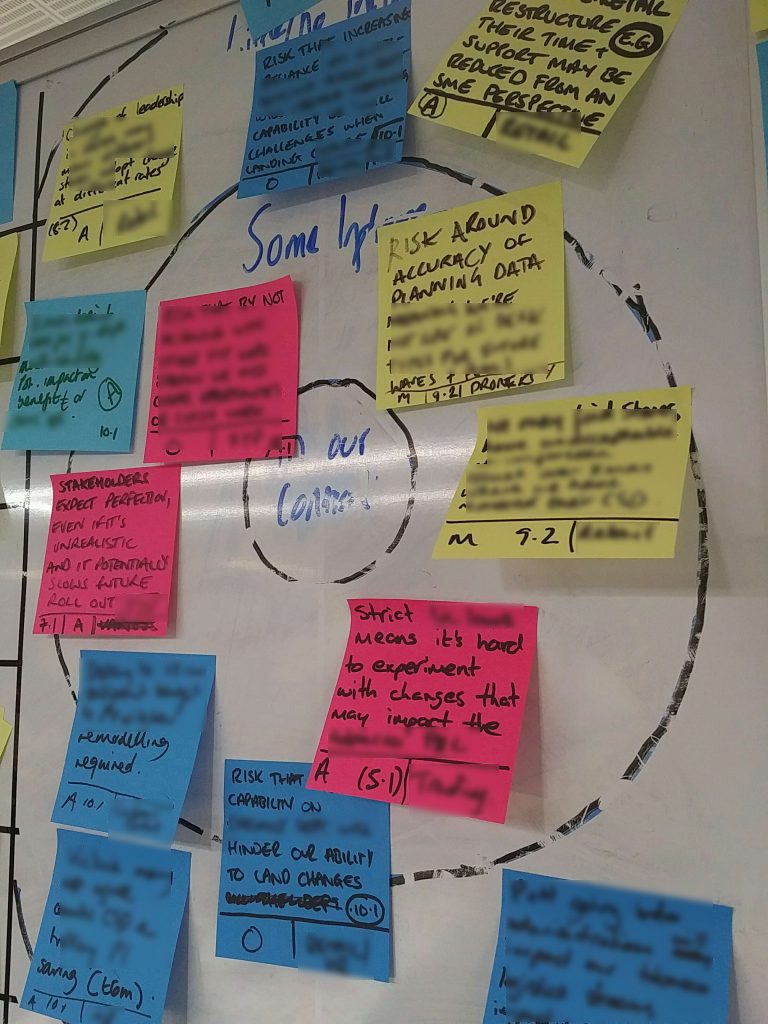
Using post-it notes, the team should add risks, issues, blockers into the appropriate circles

Actions and responsibilities

The team should plan how to resolve, own, accept, mitigate or escalate each item. This should be done with the appropriate stakeholders and leaders so they know how to help the team.

Once populated the team should focus energy on the inner circle of items since they have control of those items. The team should also focus attention on the middle circle of items since they have a degree of influence.

The sponsors, stakeholders and the leadership team should pay particular focus on the outer circle since these are items the team have little or no influence to address.

Tips

  • Team members can update these circles at any time
  • The team can review, manage and escalate items on a regular basis
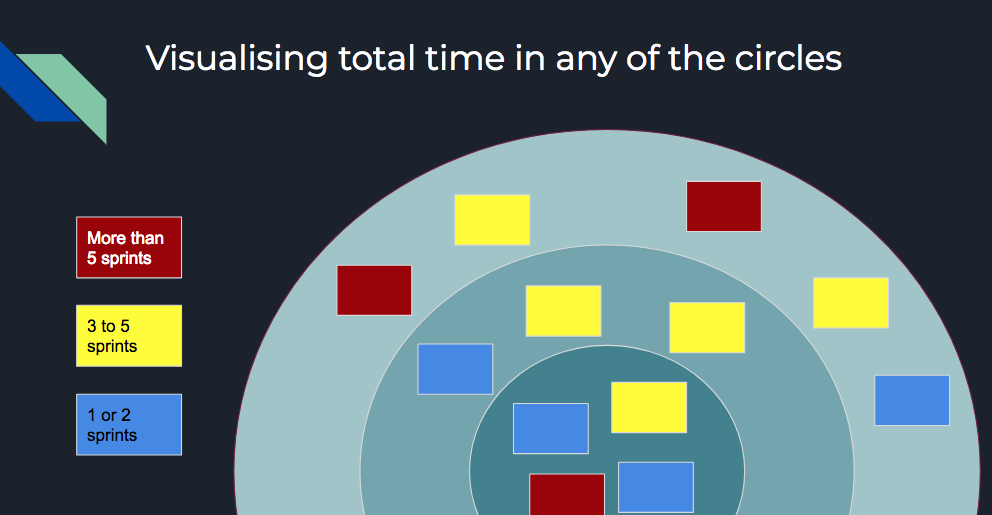
  • Different colour post-it notes can be used to denote how long items have been present

Example

Red Team technique – strengthen ideas through challenge & criticism

The problem

We sometimes find it hard to challenge and critique an idea or a way of working. Many of us are naturally hesitant and would rather not upset someone or undermine someone else’s work.

However, this avoidance misses opportunities to strengthen our colleague’s work before unquestioned commitments are made.

The solution

Often used in the military, here’s my light-weight formulation of the Red Team technique.

The technique gives individuals temporary permission to criticise and pull-apart their colleague’s idea.

A Red Team is typically between 2 and 5 people.

How to do it

  1. Sit those proposing the idea with the Red Team members
  2. Ideally, there should also be a facilitator
  3. Those proposing the idea should present their idea succinctly
  4. The Red Team members should then respond stating their questions, challenges, and criticisms

Recommendations

1. How to respond to the Red Team

Those presenting their idea should state their proposal, answer any clarifying questions, listen to the criticism, but not respond in any other way.

The Red Team’s criticisms should be noted and later used to strengthen the proposal. The proposing team could then have their improved proposal challenged by a different Red Team.

2. Things the Red Team should consider when criticising

As well as using SMART criteria, the Red Team should consider criticising an idea based on the values of their team or organisation, such as the value of action before perfection.

3. When to form a Red Team

The proposing team could schedule the Red Team exercise, or they can be more impromptu and seek volunteers to form a Red Team with little notice.

4. Who should be on the Red Team

Obviously, the Red Team shouldn’t include those working on the idea.

So the Red Team can have a degree of naivety and curiosity, I recommend they don’t know too much about the idea. Neither should the Red Team have the same understanding of the problem domain as those presenting the idea.

Red Team members should act like a critical friend.

A critical friend can be defined as a trusted person who asks provocative questions, provides data to be examined through another lens, and offers critiques of a person’s work as a friend – Desmond Nuttall

In summary

What is a Red Team

An independent group formed temporarily to challenge an idea, approach or an understanding.

Why use the Red Team technique

It helps to strengthen propositions by testing assumptions and exploring alternatives.

Related Reading

  • A powerful method, but needs more set-up and facilitation: Ritual Dissent from Cynefin Co
  • Thoughtful Disagreement developed by Ray Dalio
  • Troika Consulting: A Liberating Structures technique which helps people gain insight on issues they face and unleash local wisdom for addressing them

Training exercise

I have a training exercise that can be used to introduce the Red Team technique. Contact me if you’d like to learn about it.