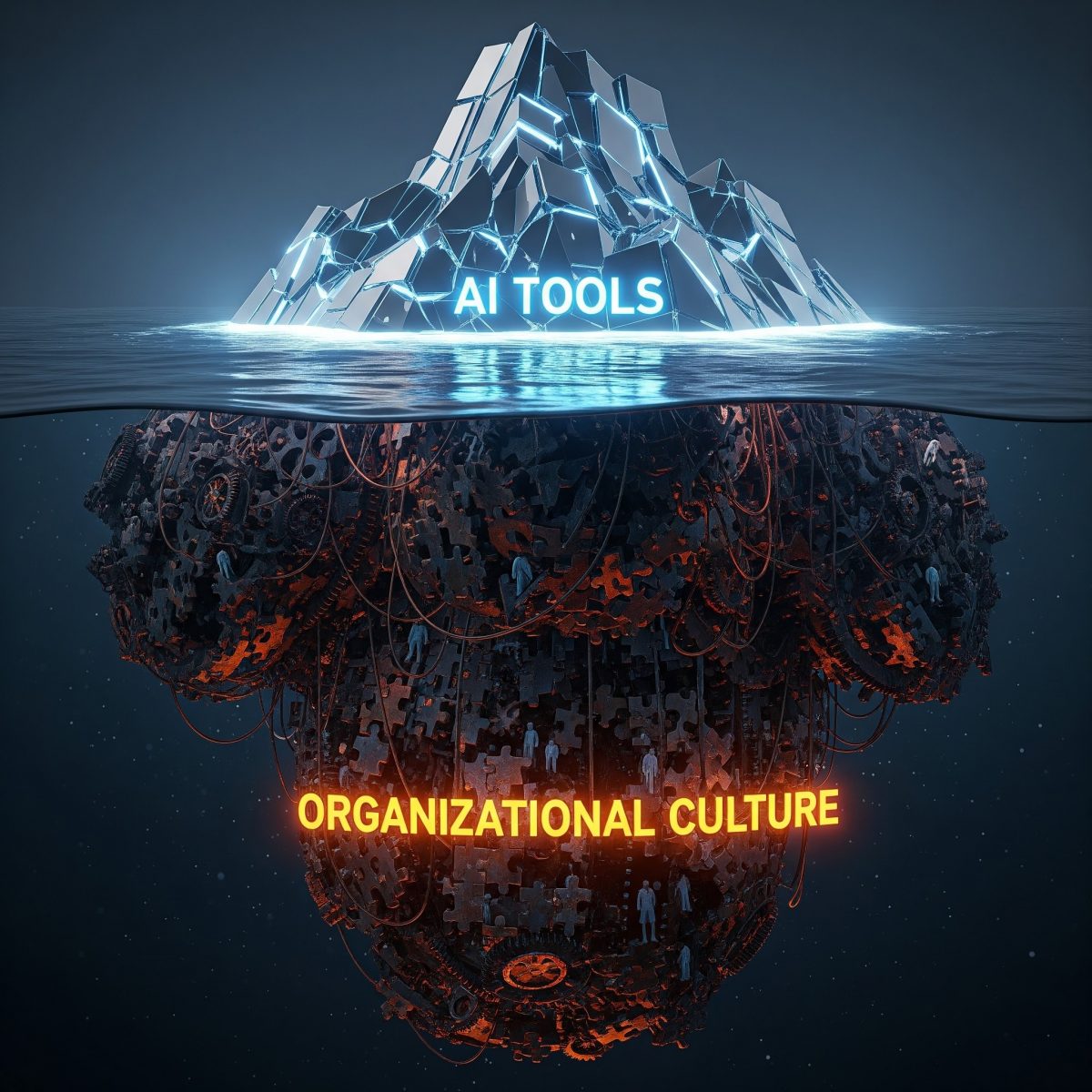
Why Your AI Tooling Isn’t Working: It’s Not the Tech, It’s the Culture

Recently I delivered a presentation about being outcome-focused when introducing tooling and technology, over merely measuring output. Output tends to target lines of code, task completion and busy work. Whereas a focus on outcomes tends to measure proof-of-value, business challenges being met and sustained user satisfaction.
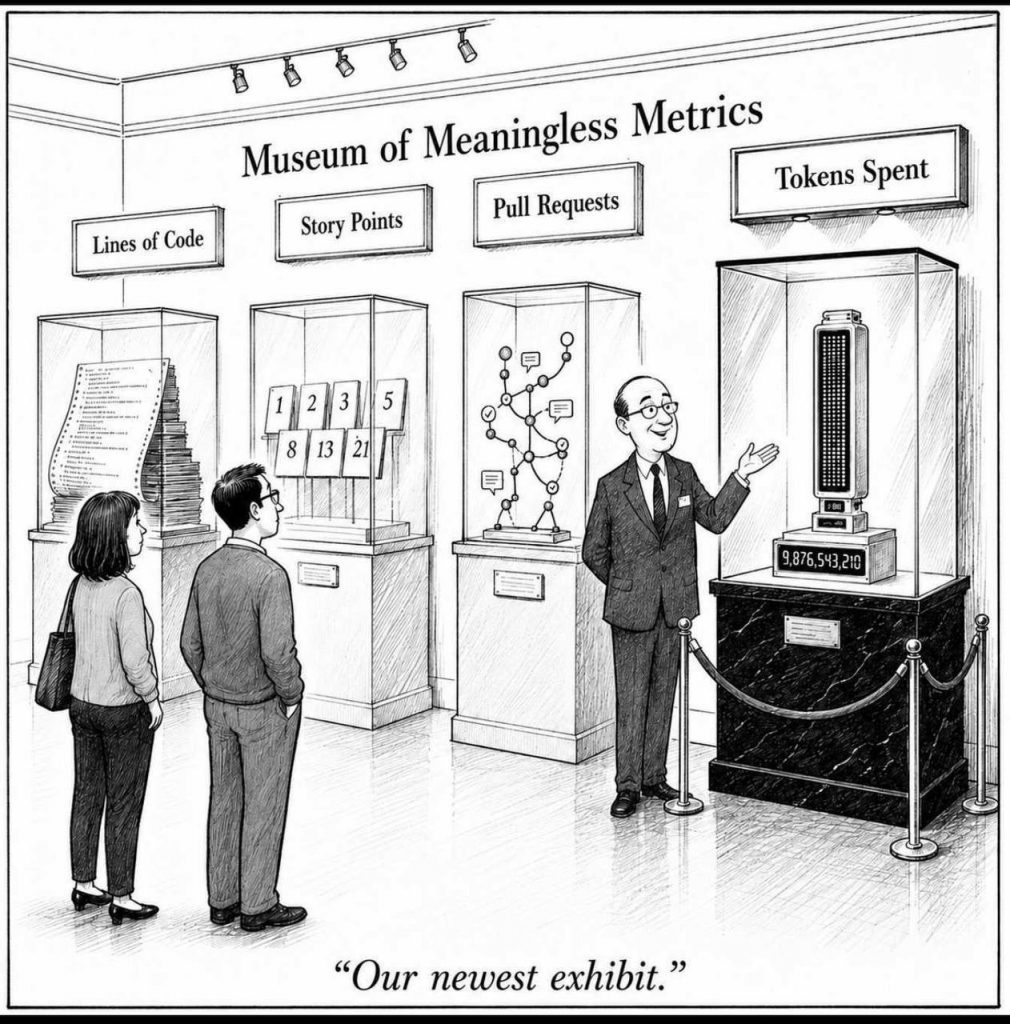
Citation r/AskVibecoders

Many organisations have spent time and treasure seeking success with AI tooling, yet struggle to attain valuable user and business impact. So measuring and targeting success with AI is an increasing concern. To put it bluntly, for some, their claims and reputations are on the line.

I cautioned against an over-focus on output by citing Goodhart’s Law, which states “When a measure becomes a target, it ceases to be a good measure”. This has been recently demonstrated by the phenomenon of tokenmaxxing.

An attendee asked, how can you promote tool adoption that is not merely targeted by measuring tool sign-ins? Doing so could lead to users just signing in to show apparent usage, but not actually getting value from the tool. It could also be a result of teams being coerced to use a tool, despite their experience that the tool isn’t helping them.

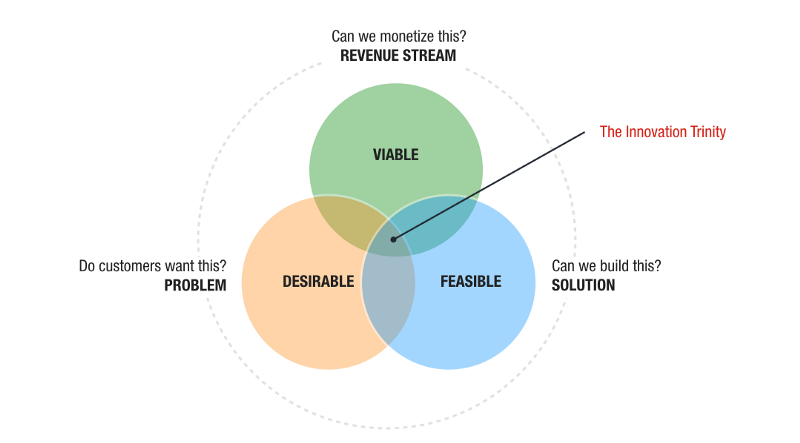
The attendee’s question deserves careful consideration. My recommendation is not to think about metrics initially. Rather to focus on the user problem to be solved, and how that can ladder-up to business impact. Take a product-centric approach which incrementally validates whether the tool is desirable, viable and feasible.

Desirability leads to user behaviour changes. These are the leading indicators that can be measured by repeat usage, user recommendations and user satisfaction. Viability is the consequential business impact. These are the lagging indicators that can be measured by cost reduction, revenue growth and market share. Feasibility ensures a tool can be built, financed and operationalised.

While the DVF framework provides the ‘what,’ alone it’ll fail to address the ‘why’ organisations struggle—the hidden, cultural inhibitors to success. So, for many organisations the near-insurmountable challenge isn’t the relationship between types of metrics. It’s the competing pressures, ill-fitting culture and organisational psychology. 

Sadly, many organisations have become so pressure-bound for ROI from AI, or certain leaders are so narrowly focused on resource utilisation, that genuinely addressing user needs and creating business impact is an afterthought. 

For many organisations, teams don’t feel safe to push back. Teams silently suffer the consequences of the sunk cost fallacy and commitment bias.

So, organisations shouldn’t only institute disciplines that judge success with the right balance of measures. They need to re-imagine their culture and operations for safe-to-learn innovation that selects for tools that genuinely address user and business needs. Using models such as Westrum’s cultural topologies, culture itself can be examined and influenced.

Give me a call if you’d like to know more.
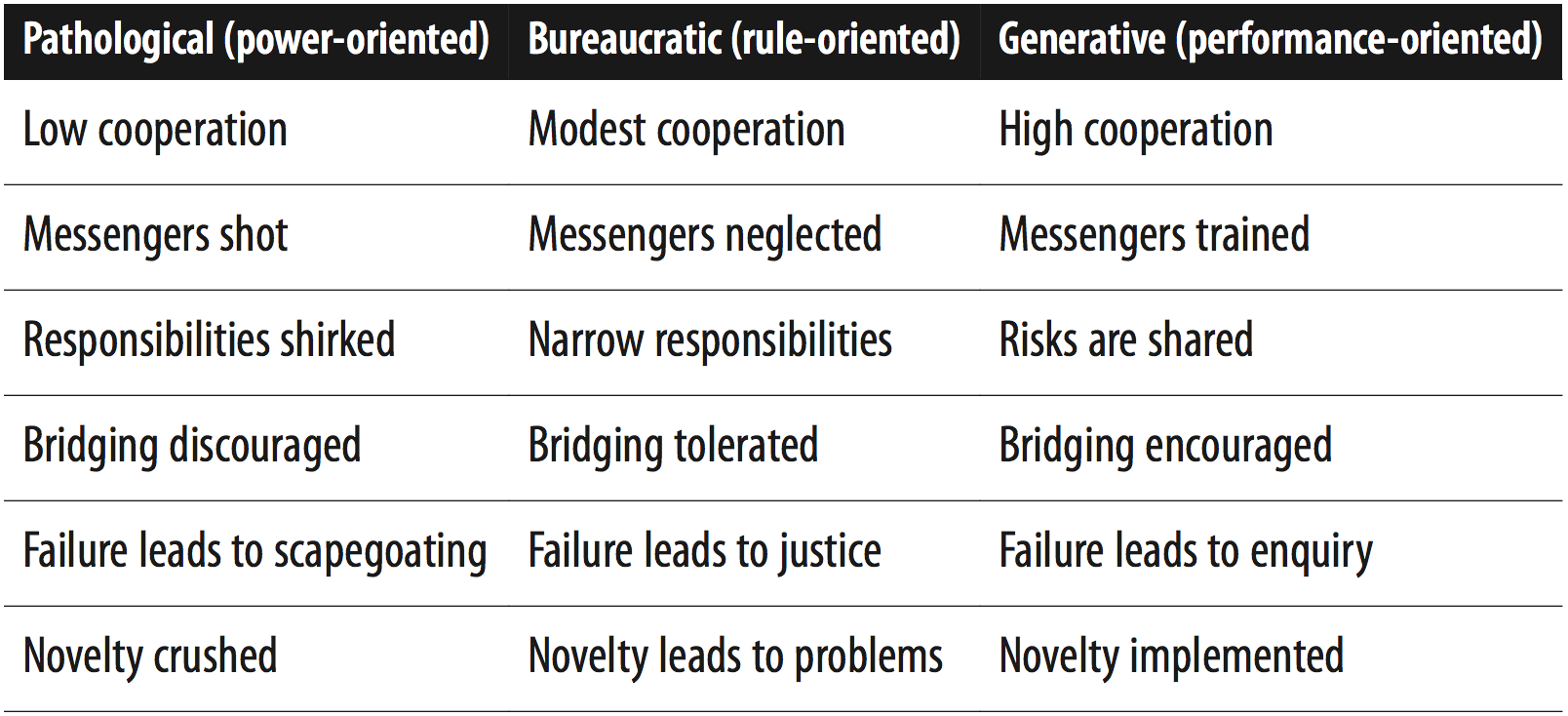
Ron Westrum’s model of Organisation Culture

When AI Becomes a Target: The Perverse Outcomes of Compelled Usage

We’ve seen this movie before. Organisations are so keen for return on their AI investments, they compel their workforce to utilise AI tools, which leads to perverse outcomes.

A recent example is Amazon setting a target for staff to use internal AI tools. To meet the target, and to consume AI tokens, some individuals have apparently automated unnecessary activities. This phenomenon of tokenmaxxing improves the rank on an internal leaderboard.

Obviously, this spurious use of AI tools wasn’t the intent. Such unintended consequences are an example of Goodhart’s Law:

“When a measure becomes a target, it ceases to be a good measure”

Rather than set targets, organisations ought to consider the underlying needs and purpose of their workforce and jointly discover solutions that will alleviate their problems.

The most impactful problem-solution fit might not even be technological. Often it is related to some misaligned combination of purpose, priorities, coordination, and process.

So rather than succumbing to pressure and becoming fixated on rolling out ill-fitting AI tools, genuinely partner with your workforce to develop sustainable solutions to their challenges. The set of solutions may or may not include AI tools.

The work I do helps managers and teams identify the mismatch between purpose and tools. It leads to a deeper appreciation and a set of interventions which genuinely enable greater individual and team performance.

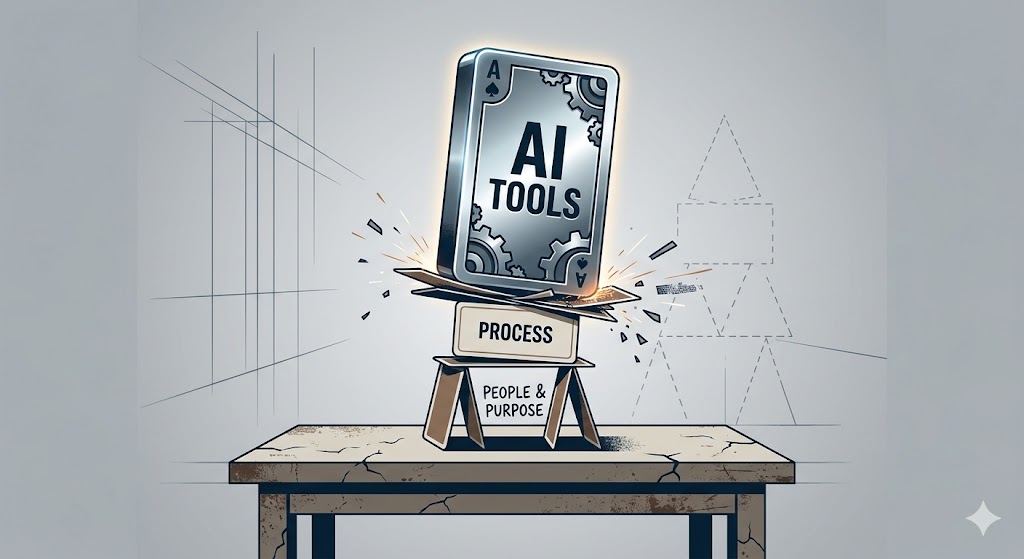
The rule of thumb is to focus on purpose & people, process and tools, in that order of importance. It’s not to repeat the bad movie plot of compelling AI usage by any means.

Do less Proof-of-Concepts

The challenge with proof-of-concepts

To understand how AI could be beneficial, many organisations are undertaking a programme of AI proof-of-concepts (PoCs). They’re seeking to demonstrate how such genuinely phenomenal tools could benefit them. I fear this approach is mistaken.

On their own a portfolio of PoCs does not validate whether they’d sufficiently address a prioritised set of business needs. Neither do PoCs validate whether the capability can be integrated and scaled in the field, without duplication or being cost prohibitive.

At best such PoCs are little more than technical demonstrations of a capability. At worst they create distraction, sunk costs and delay.

Introduce discipline

I believe we first need to put technology out of our mind. Instead we need to focus on the problems of customers, colleagues and the organisation. Identify the need before potentially overspending on an AI solution that may go nowhere.

Once there’s common alignment and prioritisation of the problem to be solved, we then need to canvas for possible solutions. Such solutions may not be technological; a solution could be related to purpose, people or process. I often ask whether a problem can be solved without touching one line of code.

Whatever the potential solution, discipline is needed to ensure its given the oxygen (e.g. funding) only if it shows demonstratable promise to sustainably solve the prioritised problem. This represents proof-of-value.

Truthfully, something like only 1 in 10 will graduate from proof-of-concept to become proof-of-value. This is the nature of discovering the needle in the haystack of organisational complexity.

What kind of value?

When assessing a solution, there are a number of frameworks for value. Here’s a couple.

IDEO’s Innovation Trinity

Consider David Kelley’s design thinking framework Desirability, Feasibility, Viability. It checks whether users actually want or need it (desirable), whether we can actually build it (feasible), and whether our business should do it (viable).

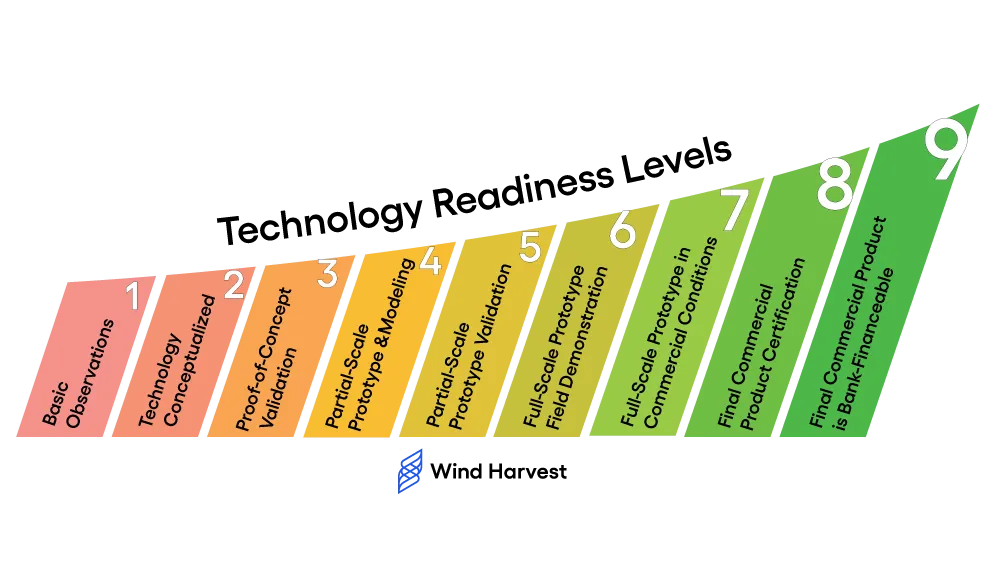
Another example is Technology Readiness Levels, which help determine which solutions are little more than concepts, and which actually show value in the field and are not financially exorbitant.

windharvest.com

Conclusion

Many organisations are keen to see value from AI and automation. However, they often take a backward approach of expending talent, capital and time to see what proof-of-concepts stick to the wall. This will likely lead to PoC fatigue, frustration and deepen operational messiness.

Rather than take this solution-first approach, organisations should take a targeted outcome-focused approach. This starts with agreement on the problem to be addressed. Then organisations should institute a discipline of evaluating which solutions are proven to show sustainable value.

Underpin the outcome-focused approach with techniques like hypothesis-driven development and Changeban.

So it’s not so much AI adoption. It’s more outcome-first adoption, which may be achieved with some AI solution.

AI and Organisational Fragility

Recent research in The Lancet reveals a systemic warning: after using AI assistance, experienced doctors’ independent diagnostic skills dropped by 20%.

This is the Automation Paradox — where “efficiency” atrophies the very intuition we rely on.

If we outsource the “hard-won lessons” to algorithms, we will likely lose the expertise for independent thought.

Are we augmenting our people or hollowing them out, leading to organisational fragility?

We must protect human judgment by designing for productive friction, ensuring AI remains a tool, not a crutch.

Ping me if you’d like to explore this.

A Beijing’s AI Strategic Gambit to undermine the West

An over-dependence on current AI tools risks eroding the deep reasoning and experience in the Western workforce and those in education. As I’ll explain, this is a phenomenon Beijing could exploit as a strategic gambit against the West.

This foreseeable Chinese maneuver threatens to trigger the lowering of Western educational standards and cause an industrial brain drain. Perversely it would be a move unintentionally enabled by Western decisions.

Specifically, short-sighted US trade sanctions are benefiting Beijing. The AI embargo is catalysing a more efficient homegrown Chinese AI industry. This drives commodification, similar to the dumping of Chinese EVs and solar panels, allowing their cheaper alternatives to undercut Western products.

These cheap Chinese alternatives will likely lead to a huge Western adoption. Such moves may lead to the dumbing down of education, the de-skilling of the workforce and an unchecked reliance on systems trained on Beijing’s values and biases. The de-skilling and cognitive atrophy in the West is not the end of Beijing’s strategic gambit.

Like Beijing’s policies to limit social media and gaming for their own youth, they are increasingly choosing to gatekeep and limit AI in its own education system. This contrasts with the Western’s less guarded enthusiasm for their children’s use of technology, like we’ve seen with EdTech initiatives for screen-based learning.

So that is the strategic gambit. It is a Chinese manoeuvre that would result in a civilisational gap in educational attainment, which will have fundamental consequences for the workforce of the future, such as the loss of human judgement.

If left unchecked, it would have immeasurable consequences of Western economies, social cohesion and national prestige.  This is not Beijing hardpower or even softpower at play. Rather it is Beijing once again playing the long-game and using the West’s own short-sightedness against them.